General
How AI Test Automation Tools Cut Regression Time by 90% in Agile Teams
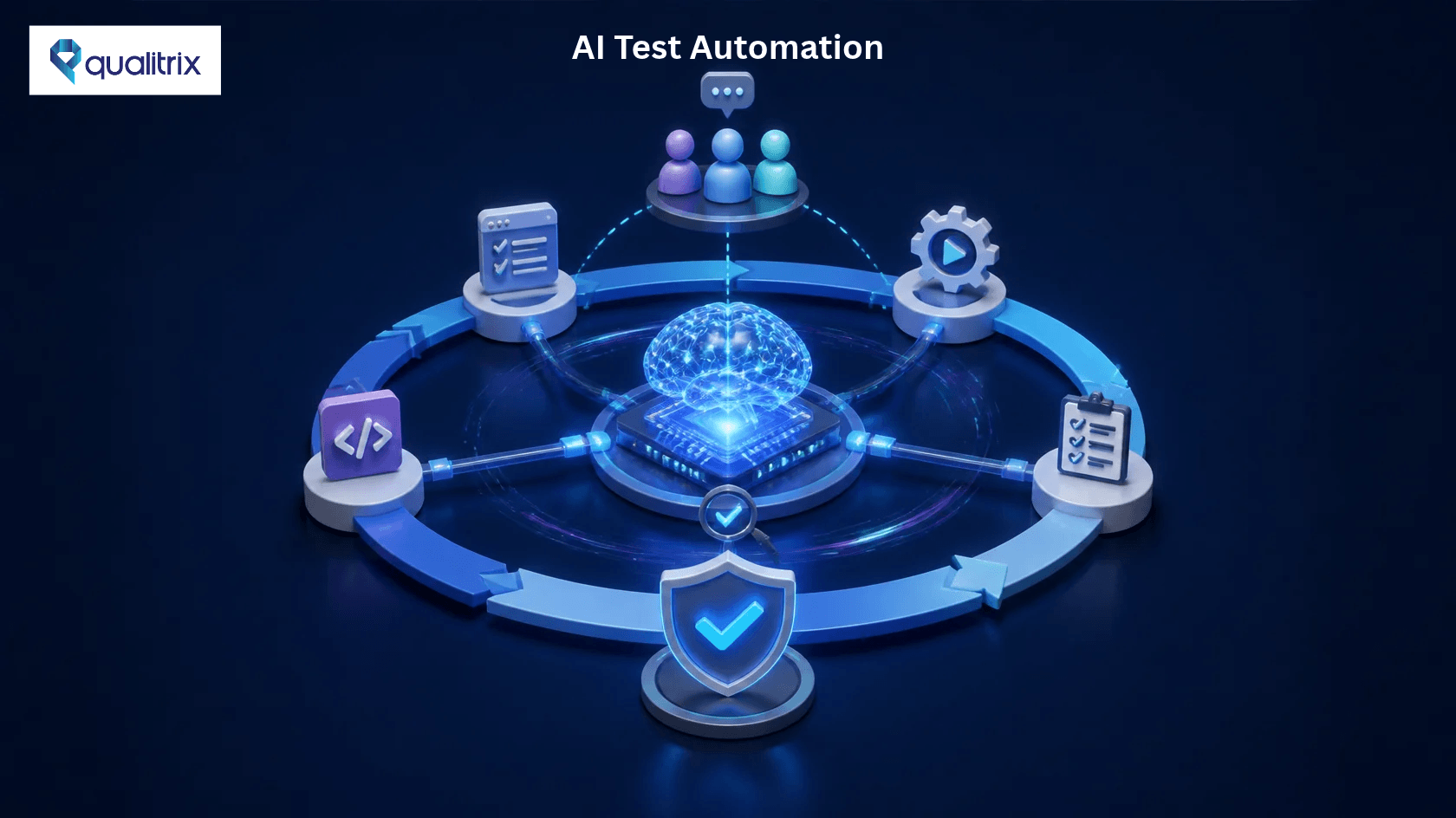

Speed is the thing when it comes to agile delivery but regression testing often uses up more time than any other activity. A team that releases every day cannot wait a day for QA to approve the work, yet skipping regression testing can bring problems into the live version. Most teams try to fix this by hiring testers or writing more code, and both options eventually reach a limit.
AI test automation takes an approach. Instead of asking engineers to write and manage every test manually, it uses smart machines to create tests faster and fix them when the application changes. This guide explains how it works, what to look for in AI test automation tools, and how one company in the financial services industry reduced its QA cycle from 16 hours to 2 hours.
Regression testing is meant to check that new code has not broken anything that was already working. In a setup where checks have to happen with every release, sometimes every single day. Three main issues make this difficult.
The number of tests keeps increasing. Each new feature adds tests, and very few are ever removed. A product with parts can collect hundreds of end-to-end paths that all need to run before each release.
Creating automation takes longer than expected. Traditional systems require engineers who can write, organize, and fix code. These engineers are costly and rare, so the test suites get built slowly while the product keeps changing around them.
Test scripts break all the time. When a button moves or a location changes, the scripts stop working even though the product is fine. Teams then spend more time fixing the tests than writing new ones, and developers stop believing in the results.
The end result is a slowdown in releases. QA becomes the step that everyone waits for, which goes against the idea of working in sprints.
AI test automation uses machine learning and similar methods to handle the parts of testing that take time. The helpful features fall into four main categories:
It is important to be clear. AI does not replace test strategy, smart test design, or the judgment of people about risk. What it takes care of is the repetitive work: writing code, fixing locators, and redoing tests. That is where most of the time is spent, which is why the improvements can be so big.
The clearest way to see the impact is through a real engagement. The client was a leading financial services provider in India working in an agile model. Its regression scope covered 240 end-to-end user journeys across four distinct products.
The existing QA process was struggling in three ways:
The client adopted Nogrunt, Qualitrix’s AI-powered automation platform, and the results were measurable:
| Metric | Before | After |
| Time to build the automation suite | 50 weeks (estimated) | 8 weeks |
| QA time per deployment | 16+ hours | ~2 hours |
| One-time automation cost | $105,000 | $10,000 |
| Time to full coverage | Baseline | 6x faster |
Two details are worth highlighting. First, the existing team completed the automation without dedicated senior automation engineers, which removed the biggest hiring constraint. Second, self-healing scripts kept tests stable as the application evolved, so the suite stayed useful after launch instead of decaying. The client also saw return on investment from day one, thanks to reduced rework and consistent release velocity. The full details are in the hyper-speed regression automation case study.
A cut from 16 hours to 2 hours equals roughly 90 percent. This is not some trick. It comes from four levers that work together.
The biggest early win is how fast you can cover your tests. If a platform cuts the coding effort, a test suite that would have taken a year to build can go live in weeks. In the case study, the timeline fell from 50 weeks to 8. Early coverage protects you from regressions sooner.
Maintenance kills automation quietly. Self‑healing spots when an element or flow has changed and adjusts the script so a small UI update does not create a wall of failures. Fewer false failures let QA focus on defects.
Tests that are built for CI/CD run reliably on every build. When regression runs automatically and finishes in two hours instead of sixteen, daily deployment becomes realistic, not just a dream.
Senior automation engineers cost a lot. They are hard to keep. If the platform lets your QA team own automation, you can grow coverage without adding more people. That is why the one‑time cost in the case study dropped from $105,000 to $10,000.
The market for AI Test Automation Tools is crowded, and many marketing claims are not always supported by results. Evaluate options against criteria:
Remember that a tool is part of the answer. Even the best platform still needs test design, clean test data, and stable environments to deliver results.
Some teams can adopt tools on their own. Many cannot. If your engineers are already stretched across feature work, adding a framework rollout on top can stall the initiative.
This is where a dedicated automation testing service helps. A specialist partner brings tested frameworks, pipeline experience, and engineers who have done this before, so you skip the learning curve. Good test automation services also go beyond building scripts. They help you prioritize what to automate, set up reporting, train your team, and keep coverage growing after the rollout.
If you want results to the case study, follow a structured sequence:
Regression testing does not have to be the bottleneck in a team. The financial services client in our case study turned a 50‑week roadmap into a sprint, cut QA time from 16 hours to about 2, and reduced its one‑time automation cost from $105,000 to $10,000. It did all of this without adding an automation headcount.
That outcome is possible because AI test automation tackles the causes of slow regression: long build times, fragile scripts, and dependence on scarce engineers. Pair the tool with good test design, pipeline integration, and, where needed, an experienced services partner, and daily deployment becomes a routine practice.
Ready to speed up your regression cycles? Talk to the Qualitrix team about AI‑powered test automation services built for delivery.
AI test automation uses machine learning and intelligent algorithms to create, run, and maintain software tests with less manual effort. Its main benefits are faster test creation, self-healing scripts that adapt when the application changes, and lower dependence on senior automation engineers.
It shortens regression by speeding up suite creation, repairing broken scripts automatically, and running tests reliably inside CI/CD pipelines. In our fintech case study, QA time per deployment dropped from 16+ hours to about 2 hours, which is roughly a 90% reduction.
Focus on self-healing quality, ease of use for your existing QA team, CI/CD integration, coverage across web, mobile, and API, clear reporting, and proof of results from real projects. Test the tool against an application that changes, not only a static demo.
Consider a service when regression is delaying releases, your team lacks bandwidth or specialized skills, or you cannot hire senior automation engineers quickly. A partner offering test automation services can set up the framework, integrate it with your pipeline, and help you scale coverage faster.
No. It removes repetitive scripting and maintenance, but human testers are still needed for exploratory testing, test strategy, and judging risk. In the case study, the existing team built and owned the automation, so the work shifted toward higher-value activities.

Future Begins With Trust
A 30-minute conversation with an engineer who has done this before — not a sales call. We will tell you what we would do differently, whether or not you work with us.